
WeddingAI.video Blog
Multilingual Wedding Videos: AI 11-Lang Package at $9.9 Each
Make your wedding video understandable to every guest with subtitles and dubbing in any language. Create your multilingual wedding film today!
10 min read · Updated 2026-10-17
Multilingual Wedding Videos: How to Make Your Film Understandable to Every Guest
Pew Research Center, 15% of US marriages are interracial or interethnic, and international marriages account for millions of weddings annually worldwide. Your wedding brought together two families, two cultures, and possibly two (or more) languages. Your grandparents speak Mandarin. Your partner's family speaks Spanish. Your college friends are scattered across three continents. The officiant spoke English, the best man told a joke in French, and your aunt gave an emotional toast in Italian.
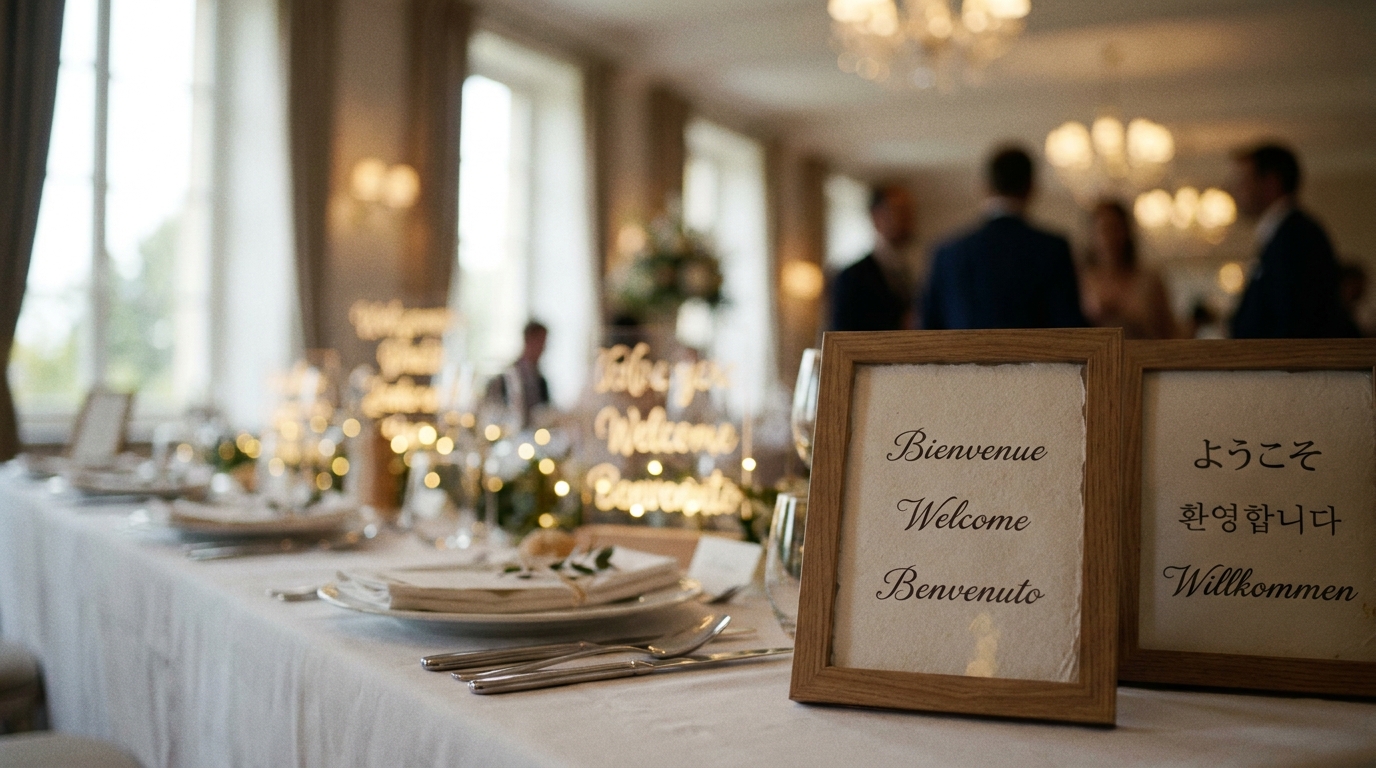
When you sit down to create your wedding video, a question emerges: how do you make a video that everyone can understand and enjoy?
This is the reality for millions of multicultural, multilingual, and international couples. And until recently, the answer was usually "they don't" — wedding videos were produced in one language, and everyone else just watched the visuals and hoped for the best.
In 2026, that's changed completely. AI-powered subtitle generation, professional translation, and even dubbing technology mean you can create a wedding video that speaks to every guest in their own language.
Why Multilingual Wedding Videos Matter
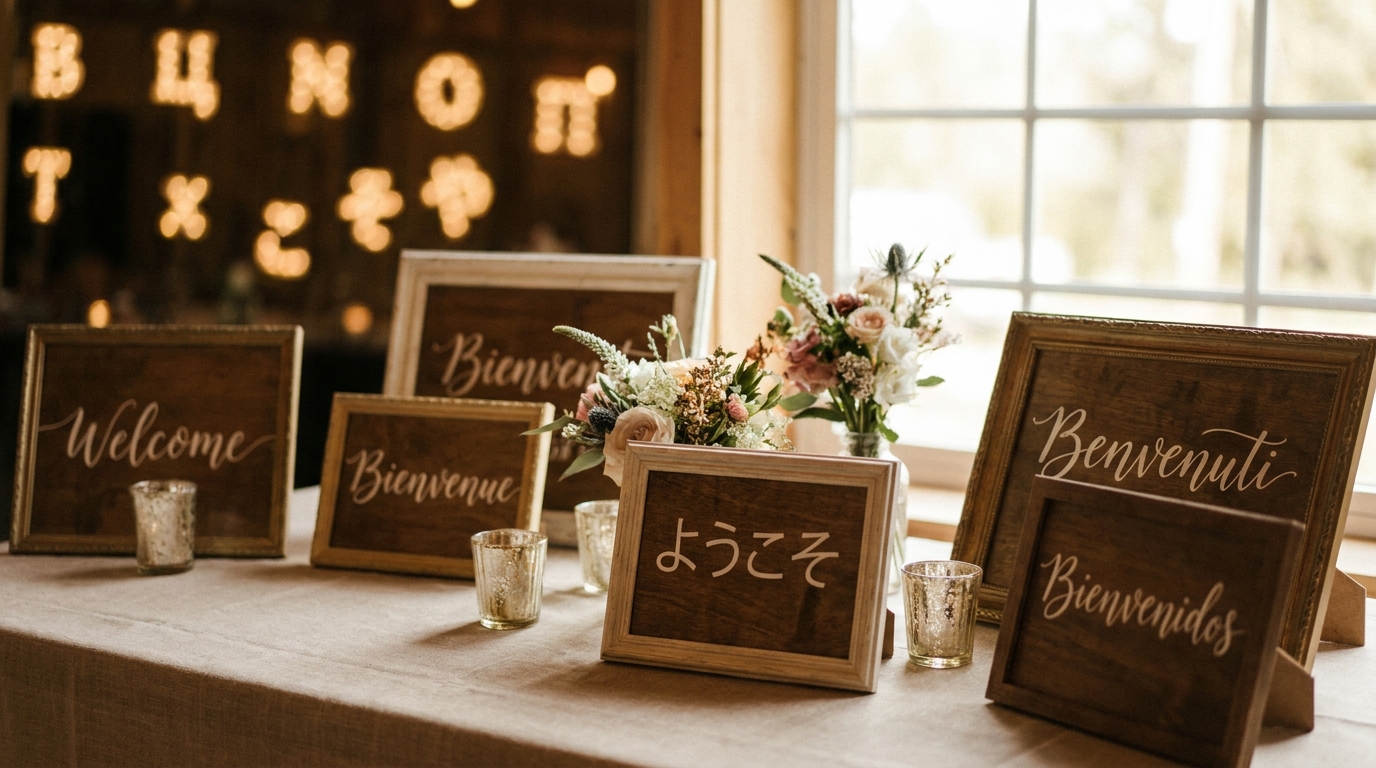
Wedding videos aren't just documentation — they're emotional experiences. And emotion requires understanding. When your grandmother watches your wedding video but can't understand the vows, the toasts, or the speeches, she's missing the emotional core of the film. She sees the beauty but misses the meaning.
Multilingual subtitles and dubbing solve this by ensuring that:
- Every family member feels included— no one is left watching a "foreign" film of their own family's wedding
- Cultural traditions are explained— rituals, customs, and ceremonies that may be unfamiliar to one side of the family become accessible
- Emotional moments land universally— a toast that makes one side of the family cry should make the other side cry too
- Future generations can access it— your children and grandchildren may speak different languages than your wedding guests
- The video is shareable across cultures— when you post on social media, subtitles make your content accessible to a global audience
The Multilingual Wedding Landscape
Before diving into solutions, let's acknowledge how common this situation is:
- 15% of US marriages are interracial or interethnic (Pew Research Center)
- International marriages account for millions of weddings annually worldwide
- Many domestic weddings involve families where English is a second language
- Destination weddings inherently involve multiple language groups
- Immigrant families often maintain their native language alongside English
If your wedding involves multiple languages, you're not an edge case — you're increasingly the norm.
Options for Multilingual Wedding Videos
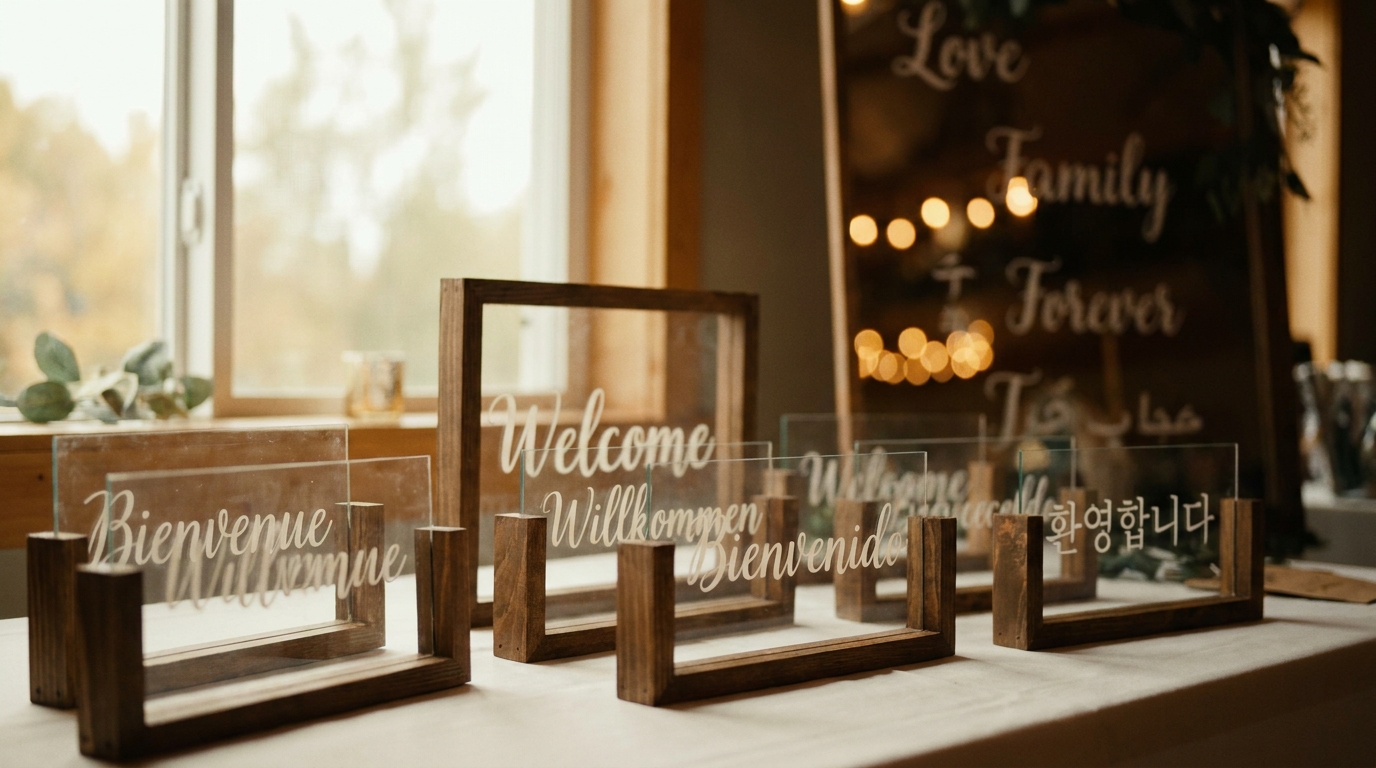
Subtitles (The Most Popular Solution)
Subtitles are the gold standard for multilingual wedding videos because they:
- Don't alter the original audio — you hear the authentic voices and emotions
- Work for any number of languages simultaneously
- Are familiar and comfortable for viewers (everyone watches subtitled content)
- Can be toggled on/off or switched between languages on digital platforms
- Don't require re-recording anything
How it works:
- The original audio is transcribed in the source language
- The transcription is translated into target languages
- Subtitles are synced to the video with proper timing
- Multiple subtitle tracks are embedded or delivered as separate files
Languages we support:Over 50 languages, including English, Spanish, French, German, Mandarin, Japanese, Korean, Arabic, Hindi, Portuguese, Italian, Russian, and many more.
multilingual subtitle and dubbing servicehandles the entire process from transcription to final delivery.
Dubbing (For Maximum Accessibility)
Dubbing replaces the original audio with a translated voiceover. While less common for wedding videos than subtitles, it has specific advantages:
- Accessibility for elderly family memberswho may have difficulty reading subtitles
- Children who can't read yetcan understand the content
- Background viewing— dubbed videos work when you're not watching closely
- Specific audience targeting— a dubbed version for grandparents who don't read well in any language
Types of dubbing:
- AI voice dubbing:Uses AI-generated voices that match the tone and emotion of the original speaker. Modern AI voices are remarkably natural and can convey emotion authentically.
- Professional voice dubbing:Human voice actors record translated dialogue. More expensive but offers the highest quality and most natural delivery.
- Lip-sync dubbing:Advanced AI adjusts the speaker's lip movements to match the dubbed audio. This is the most immersive option but also the most complex.
Multilingual Title Cards and Text
Even if you keep the original audio unchanged, you can add multilingual elements:
- Translated title cards— your names, date, and location in multiple languages
- Translated text overlays— identifying speakers, locations, and traditions in multiple languages
- Bilingual or trilingual captions— key phrases, vows, and quotes translated as on-screen text
- Cultural context explanations— brief text explaining traditions that may be unfamiliar to one side of the family
Combination Approach
Many couples choose a combination:
- Original audio preserved throughout
- Subtitles in 2-3 languages for speeches and vows
- Translated title cards for key moments
- A dubbed version created specifically for elderly family members
This layered approach ensures maximum accessibility while preserving the authentic audio experience.
Which Parts of the Video Need Translation?
Not everything requires translation. Focus your multilingual efforts on the moments where language carries the most meaning:
Must-Translate
- Vows— the emotional core of the ceremony; everyone should understand what you promised each other
- Toasts and speeches— these are often the funniest, most emotional, and most personal moments
- Officiant's words— the pronouncement, blessings, and any religious or cultural readings
- Personal messages— if remote family members sent video messages in their native language
Nice to Have
- Background conversations— candid moments where people are talking
- Reception events— cake cutting narration, bouquet toss commentary
- Welcome and thank-you remarks— if the couple or MC addresses guests
Probably Skip
- Music and singing— unless lyrics are important to the meaning
- Crowd noise and ambient sound— no translation needed
- Non-verbal moments— slow motion, dancing, purely visual sequences
wedding video timing and timeline. You can also learn more aboutadding subtitles to wedding videosfor additional technical guidance.
How to Plan for Multilingual Video From the Start
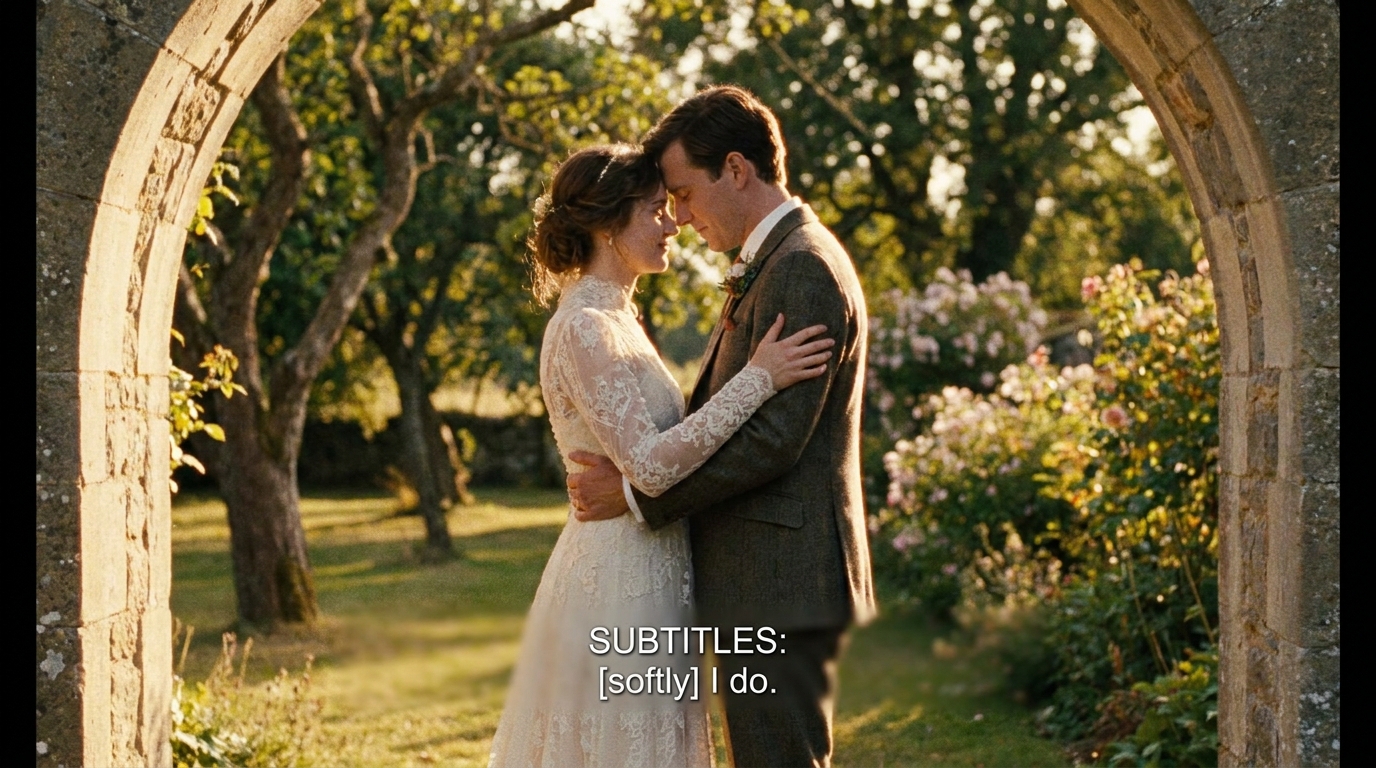
If you know in advance that you'll want a multilingual wedding video, you can optimize during the wedding itself:
Audio Capture Tips
- Use lapel microphoneson anyone giving a speech — this captures clean audio essential for accurate transcription and translation
- Minimize background music during speeches— music overlapping with speech makes transcription harder and subtitles less effective
- Ask speakers to pace themselves— slightly slower speech is easier to subtitle and translate accurately
- Record speeches separately if possible— some couples do a "second take" of speeches in a quiet room for clean audio
Content Considerations
- Bilingual officiantscan perform the ceremony in both languages, making the original video naturally multilingual
- Bilingual toasts— speakers can deliver their toast in both languages, or alternate between speakers in different languages
- Cultural explanations— ask the officiant or MC to briefly explain cultural traditions for guests who may be unfamiliar
- Signage and programs— bilingual programs and signage create visual context that enhances the video
Post-Wedding Translation Process
After the wedding, the multilingual video production process typically follows these steps:
- Transcription:Professional or AI-powered transcription of all spoken content in the original language
- Review and correction:Ensuring the transcription is accurate, especially for names, cultural references, and non-English words
- Translation:Professional translation into target languages, with attention to cultural nuance and emotional tone
- Timing and sync:Aligning subtitles precisely with the audio — this is crucial for a natural viewing experience
- Style and formatting:Designing subtitle appearance (font, size, color, position) that complements the video's visual style
- Quality review:Native speakers review the translated subtitles for accuracy and naturalness
- Final integration:Subtitles embedded into the video or delivered as separate files
Technical Aspects of Multilingual Video Delivery
Subtitle File Formats
- SRT (SubRip):The most widely supported format. Compatible with virtually all video players and platforms.
- VTT (WebVTT):The web standard. Required for HTML5 video players and most streaming platforms.
- Burned-in subtitles:Permanently embedded in the video image. Always visible, no toggling. Best for social media sharing.
- Soft subtitles:Separate tracks that can be toggled on/off. Best for digital delivery where viewers may want to choose their language.
Platform-Specific Considerations
YouTube:Supports multiple subtitle tracks natively. Viewers can select their preferred language. Best platform for multilingual delivery.
Instagram/TikTok:No native multi-language subtitle support. Burn in the primary subtitle language, or create separate versions for each language.
Vimeo:Supports multiple subtitle tracks like YouTube. Better for private sharing with family.
Wedding website:Embed a player with subtitle selection, or provide download links for different language versions.
Delivery Recommendations
For maximum accessibility, we recommend delivering your multilingual wedding video with:
- primary versionwith burned-in subtitles in the most common secondary language
- clean versionwith no subtitles (for those who understand the original language)
- SRT filesfor additional languages that viewers can load in their preferred video player
- dubbed versionfor elderly family members who have difficulty reading subtitles
multilingual servicedelivers all of these formats as part of a standard package.
Real Multilingual Wedding Video Stories
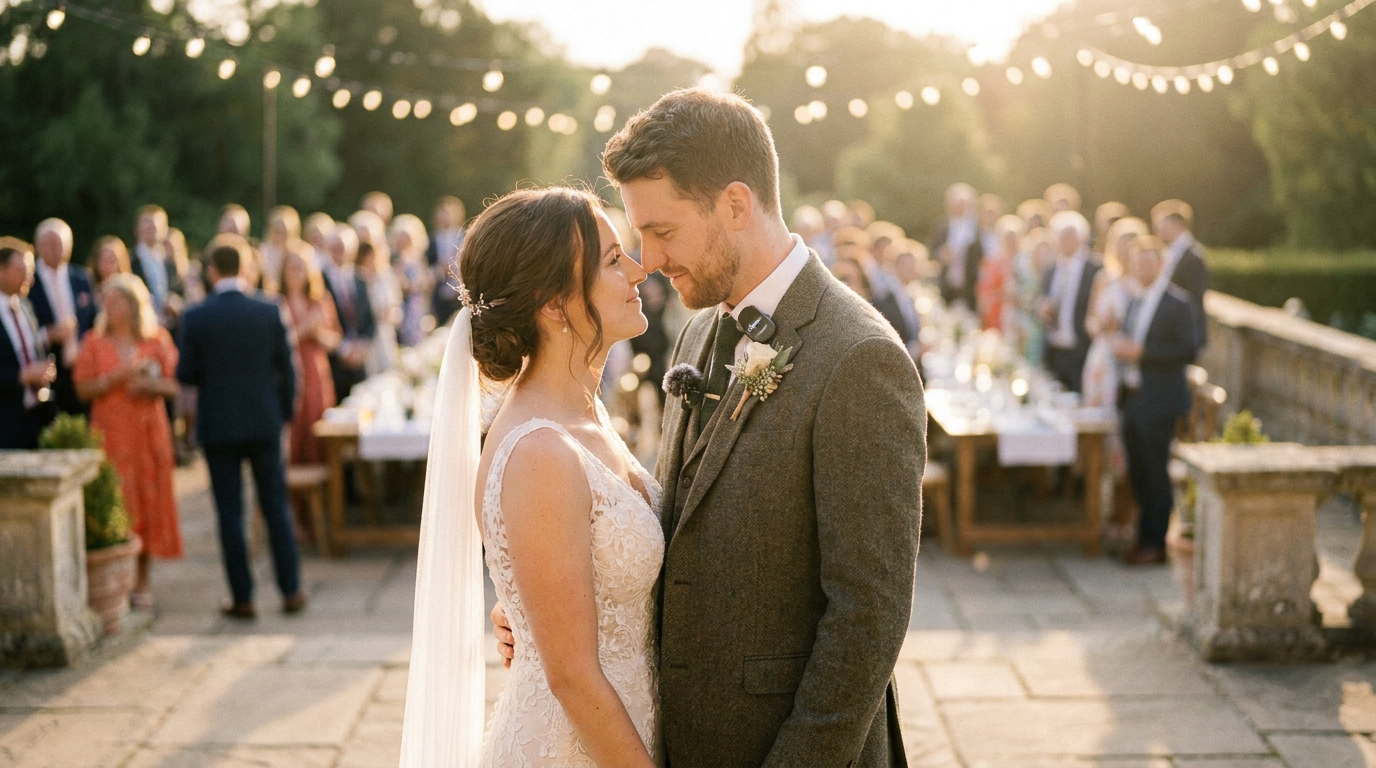
The Four-Language Wedding:Anna (German) married Kenji (Japanese) in a ceremony in California. The officiant spoke English, Anna's parents gave a toast in German, Kenji's grandmother spoke in Japanese, and the best man told stories in English with German phrases. The final video included subtitles in English, German, and Japanese — three tracks that viewers could select. "For the first time, both of our families could fully experience the same video," Anna told us. "My grandmother cried watching Kenji's grandmother's toast — and she understood every word."
The Surprise Translation:Michael's parents spoke only Portuguese. He surprised them with a version of the wedding video dubbed entirely in Portuguese, with AI voices that matched the speakers' tones. "When they heard the vows in Portuguese, they broke down," Michael shared. "They'd understood the ceremony from context and emotion, but hearing the actual words in their language was something else entirely."
The Social Media Hit:A couple's bilingual wedding video — with English and Spanish subtitles alternating depending on who was speaking — went viral on TikTok. The seamless language switching resonated with bilingual audiences worldwide. The video hit 2 million views and sparked a trend of couples sharing their multilingual wedding moments.
Frequently Asked Questions
How accurate is AI translation for wedding video subtitles?
Modern AI translation is remarkably accurate for common language pairs and general content. However, for wedding-specific content — vows, personal speeches, cultural references, and idioms — professional review is essential. We use AI as a starting point and have native speakers review and refine every translation. This hybrid approach ensures both speed and accuracy.
Can I add subtitles to a wedding video that's already been finished?
Yes — subtitles can be added to any existing video. You'll need clean audio for accurate transcription. If the audio quality is poor (lots of background noise, music overlapping speech), the transcription process may require more manual effort, but it's always possible.
How many languages can I include in one video?
Technically, there's no limit. Each language is a separate subtitle track. In practice, most couples choose 2-3 languages that cover their family's needs. YouTube and Vimeo support dozens of subtitle tracks simultaneously, so even large language families can be accommodated.
Will subtitles cover important parts of the video?
Professional subtitle placement is designed to be readable without obscuring important visual content. Subtitles typically appear at the bottom of the frame, timed to appear only when someone is speaking, and styled to be readable without being distracting. Burned-in subtitles can also be positioned to avoid covering faces or key visual elements.
Is dubbing or subtitling better for wedding videos?
Subtitles are generally preferred because they preserve the original voices and emotional delivery. The sound of your partner's voice cracking during vows, your grandmother's accent, the laughter in the room — these are irreplaceable. However, dubbing has a place for elderly viewers or those who struggle with reading. Many couples create both versions.
Every Guest Deserves to Understand Your Story
Your wedding video should be as inclusive as your wedding itself. When every family member — regardless of the language they speak — can understand the vows, laugh at the toasts, and feel the emotion of your day, the video becomes a true bridge between cultures and generations.
Don't let language be the barrier that keeps your loved ones from fully experiencing your love story.
Ready to Transform Your Wedding Memories?
Tell us about your project and we'll get back within 24 hours with a free quote.
Get a Free Quote →